
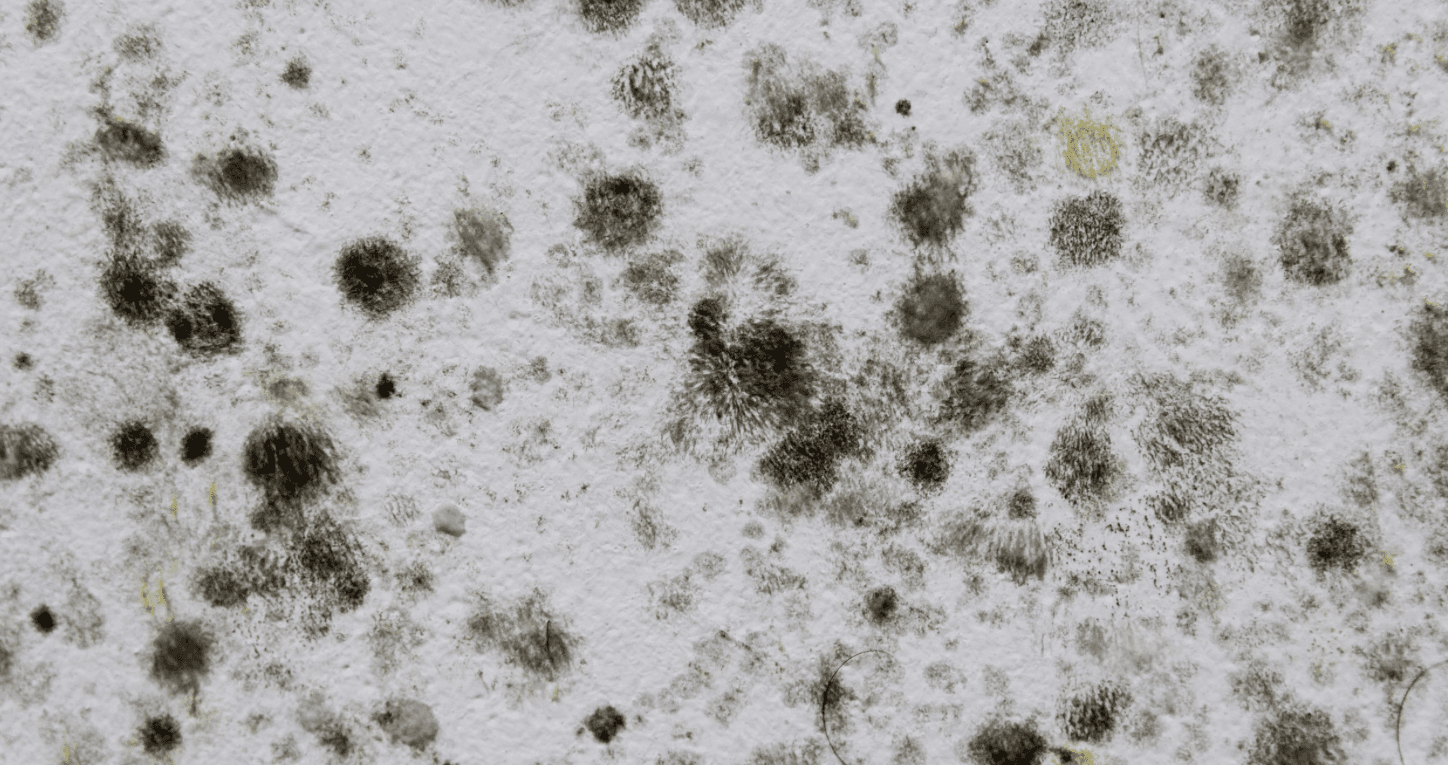
Black Mold in Utah: What Homeowners Need to Know
Black Mold in Utah: What Homeowners Need to Know
What is “black mold,” really?
“Black mold” is a commonly used term that typically refers to Stachybotrys chartarum, a species associated with water-damaged materials. In practice, however, the term is often misapplied. Many molds appear dark in color, and visual identification alone cannot determine species or potential risk.
In Utah homes, Stachybotrys is not the most commonly encountered mold. When it is present, it is usually an indicator of a chronic or prolonged moisture issue, rather than a standalone concern. The presence of any mold—regardless of type—should prompt a closer evaluation of the underlying conditions that allowed it to grow.
Mold growth is a moisture problem
Mold does not develop randomly. It requires a combination of organic material, suitable temperatures, and—most critically—moisture over time.
In residential environments, this typically results from:
Plumbing leaks, including slow or hidden failures
Roof or flashing defects allowing water intrusion
Poor ventilation leading to condensation buildup
Basement or crawlspace moisture migration
HVAC-related condensation or drainage issues
In Utah, these issues can be less obvious due to the region’s dry climate. Homes in areas like Salt Lake County often experience seasonal condensation, particularly during colder months when indoor and outdoor temperature differentials are greatest. Snow cover can also suppress outdoor spore levels, making indoor conditions appear deceptively “clean” during testing.
For this reason, the absence of visible growth or strong odors does not rule out a moisture-driven issue.
Where it tends to be found
When Stachybotrys or similar molds are identified, they are almost always associated with materials that have remained damp for extended periods.
Common locations include:
Drywall and insulation behind walls following leaks
Subflooring or baseboards affected by past water events
Cabinetry and wall cavities beneath sinks
Window assemblies with repeated condensation
Attic sheathing where ventilation is insufficient
These are not random occurrences. They reflect areas where moisture was introduced and not adequately resolved.
The limitations of testing alone
Mold testing can be a useful tool, but it is frequently misunderstood.
Air sampling, in particular, provides a snapshot of airborne particles at a single point in time. It does not reliably detect all forms of growth, especially when mold is hidden within building assemblies. Heavier spores or growth structures may not readily aerosolize, and results can be influenced by airflow, disturbance, and environmental conditions at the time of sampling.
For this reason, testing should not be used in isolation. A reliable assessment integrates:
Direct observation of building materials
Moisture measurement and mapping
Evaluation of humidity and ventilation conditions
Targeted sampling when it serves a specific purpose
Without this context, laboratory results can be misleading or incomplete.
Is “black mold” more dangerous?
The term carries a strong connotation, but it is not particularly useful from an assessment standpoint.
Different molds have different characteristics, but risk is not determined by color or species name alone. Exposure considerations depend on multiple factors, including concentration, duration, and individual sensitivity. Many commonly encountered molds can affect indoor air quality under the right conditions.
Professional evaluations therefore focus on:
The presence and extent of growth
The conditions supporting that growth
The potential for continued exposure
Rather than assigning significance based solely on the label “black mold.”
What to do if it’s suspected
When there is reason to suspect mold—whether visible or not—the priority is to identify and correct the moisture source.
A proper inspection should evaluate the building as a system. This includes assessing areas prone to water intrusion, verifying moisture levels in materials, and examining HVAC components that may contribute to distribution or persistence of contaminants.
If growth is confirmed, remediation should follow established guidelines such as those outlined by the Institute of Inspection Cleaning and Restoration Certification (IICRC S520) and supported by guidance from organizations like the American Industrial Hygiene Association (AIHA). These standards emphasize containment, removal of affected materials when necessary, and correction of the underlying cause.
Cleaning the air without addressing the source is not sufficient. Likewise, removing visible growth without resolving moisture will lead to recurrence.
Final perspective
The focus on “black mold” often distracts from the more important issue: why mold was able to grow in the first place.
In residential environments, mold is not the root problem—it is a symptom. Addressing it effectively requires identifying the conditions that allowed it to develop and ensuring those conditions are corrected.
A thorough, building science–based approach will always provide more reliable outcomes than relying on labels, assumptions, or isolated test results.
About the Author
Written by Devon Kennedy, Certified Indoor Environmentalist through the American Council for Accredited Certification (ACAC) and founder of Utah Mold Pros. His work focuses on moisture-driven investigations, HVAC-related contamination, and practical, source-focused indoor environmental assessments across Utah.


