
Mold Testing
Lab-verified mold identification
Other services
Mold Testing in Utah | Mold Air, Surface, and Wall Cavity Sampling
Most mold problems aren't visible.
Spores travel through air. They settle into dust. They accumulate inside wall cavities and HVAC systems long before anyone notices a smell or sees discoloration. By the time mold becomes obvious, it's usually been there for a while.
Mold testing confirms what's present in the environment — the species, the concentrations, and whether indoor air quality is within normal range or elevated beyond it. It turns a suspicion into documented, lab-verified evidence.
At Utah Mold Pros, all testing is performed by Devon Kennedy, a Certified Indoor Environmentalist (ACAC-CIE). Samples go to an accredited third-party laboratory. Results come back within 24–48 hours and are walked through with you directly — what the numbers mean, what they don't mean, and what a reasonable next step looks like.
No speculation. No upselling. Just accurate data.
Mold Testing vs. Mold Inspection: Two Different Tools
These terms get used interchangeably. They serve different purposes.
Mold inspection is a physical evaluation of the building — tracing moisture, identifying sources, and assessing building materials. It answers where and why. See mold inspection →
Mold testing is laboratory analysis of what's present in the air, on surfaces, or within building materials. It answers what and how much.
In most cases, testing is most useful when paired with a physical inspection — the inspection identifies the source, the test documents the conditions. But there are situations where testing alone is the right tool: documentation for insurance or legal purposes, post-remediation clearance, or confirming whether a remediated space has returned to normal levels.
When Mold Testing Makes Sense
You suspect mold but can't locate it. Elevated spore counts in the air or dust indicate active mold growth somewhere in the building, even when nothing is visible.
You need documented evidence. Insurance claims, landlord disputes, legal proceedings, and real estate disclosures all require lab-verified findings — not a visual assessment or a verbal opinion.
You're experiencing symptoms. Unexplained congestion, fatigue, headaches, or brain fog that improve away from home may have an environmental cause. Testing the air and surfaces provides objective data to evaluate alongside medical findings — particularly relevant in CIRS, PANS, and PANDAS cases.
You're buying or selling a property. Testing provides documented confirmation of indoor air quality conditions at the time of transaction — useful for buyers seeking due diligence and sellers establishing baseline documentation.
Post-remediation verification. After mold remediation, testing confirms whether the work achieved normal spore levels. This clearance should always be performed by an independent party — not the company that did the remediation. See clearance testing →
Allergies or persistent odors. Musty odors and allergy-like symptoms without a clear cause are worth investigating. Testing can confirm or rule out elevated mold as a contributing factor.
Types of Mold Testing We Offer
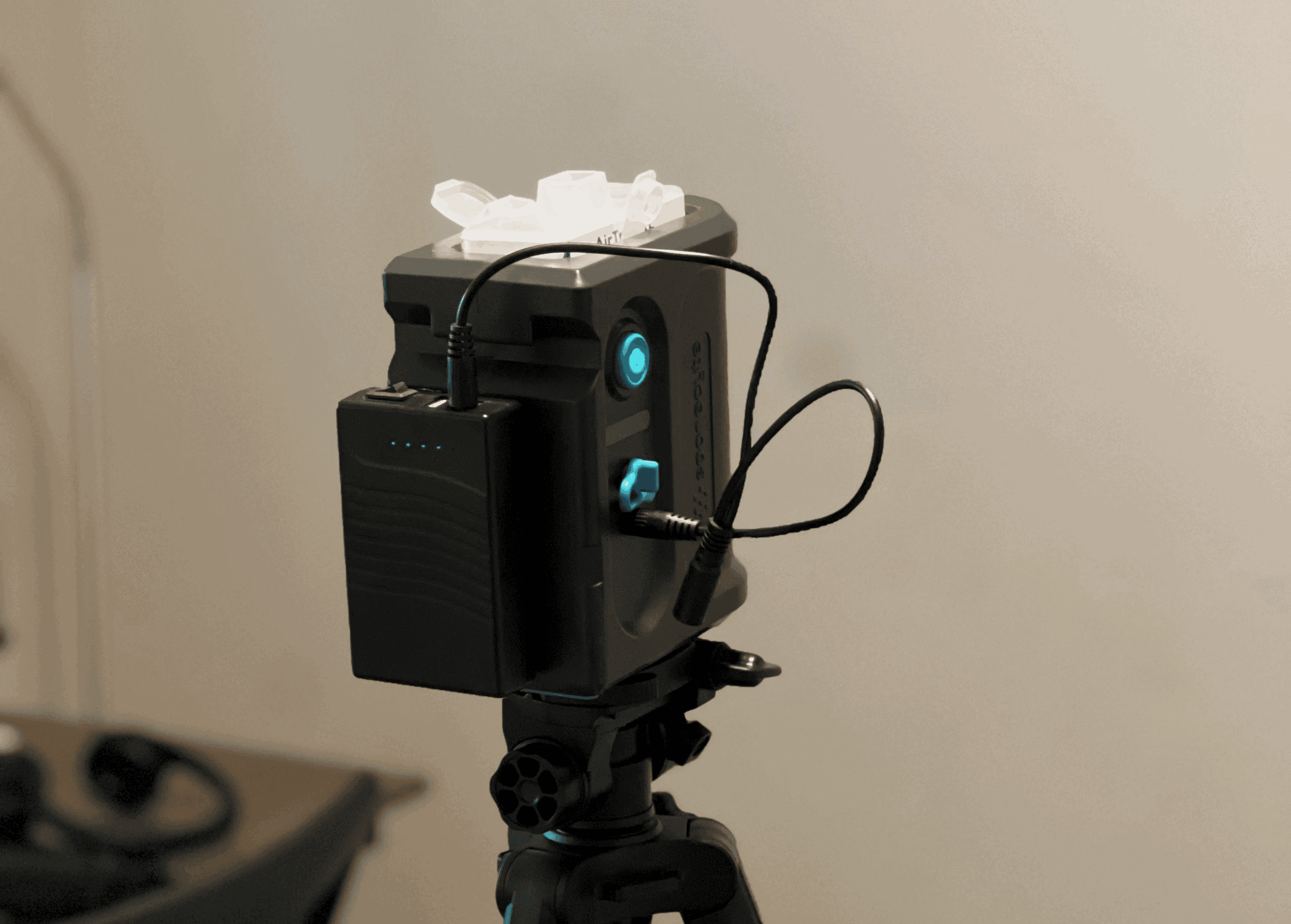
Air sampling is the most common form of mold testing. An air sample captures airborne spores from the interior of the home and compares them against an outdoor control sample. The comparison determines whether indoor mold levels are normal, mildly elevated, or significantly elevated relative to the outdoor baseline. Elevated indoor counts relative to outdoor suggest an active mold source inside the building.
Surface sampling is used to confirm and identify mold-like growth on a specific material. Collected by swab, tape lift, or bulk sample, surface tests allow precise species identification — useful when visible growth needs to be characterized or when the nature of a stain is in question.
Wall cavity sampling is a minimally invasive test that draws air directly from inside a wall or ceiling cavity through a small access point. It detects hidden mold behind drywall, under flooring, or within damp building assemblies that wouldn't show up in a standard air sample from the living space.
Dust sampling captures historical spore activity that has settled into surface dust over time. Dust testing can reveal past contamination events, current spore load from an ongoing source, or residual levels following remediation. It's particularly useful in ERMI and HERTSMI-2 protocols. See specialty testing →
What You Get With Every Test
Samples collected by an ACAC Certified Indoor Environmentalist
Analysis by an accredited third-party laboratory
Results within 24–48 hours
A written report with findings in plain language — not just raw lab data
A free post-report consultation to walk through what the results mean and what, if anything, comes next
Zero pressure, zero upselling, zero remediation referrals
The report we deliver is the only product we're selling. What you do with the findings is your decision.
Why Independence Matters in Mold Testing
Testing performed by a company that also sells remediation carries an inherent conflict of interest.
Elevated findings justify remediation work. Normal findings don't. When the same company profits from both the test and the work that follows, the incentive structure isn't aligned with producing an accurate result — it's aligned with producing a result that generates revenue.
Utah Mold Pros does not remediate. We have no financial relationship with any remediation company. Our findings reflect what the lab reports and what the building contains — nothing more, nothing less.
About Utah Mold Pros
Utah Mold Pros provides independent, certified mold testing and inspections throughout Salt Lake County and Northern Utah. Every assessment is performed by Devon Kennedy, a Certified Indoor Environmentalist through the American Council for Accredited Certification (ACAC).
Devon holds a BSc in Microbiology and an MBA — a combination that informs both the scientific interpretation of lab results and the building-science context that makes those results meaningful.
We do not perform remediation, ensuring that every finding is unbiased and every recommendation is based solely on what the environment actually contains.
Mold Testing Service Areas in Salt Lake County
We serve homeowners, renters, landlords, and real estate professionals throughout Salt Lake County — including Salt Lake City, South Salt Lake, Millcreek, Holladay, Murray, Midvale, Sandy, Draper, Cottonwood Heights, West Valley City, West Jordan, South Jordan, Riverton, Herriman, Taylorsville, Kearns, and Magna.
Local. Independent. We come to you.
Schedule Mold Testing in Utah
If you have a concern about your indoor air quality or need documented evidence of mold conditions, the starting point is a straightforward conversation.
Call or text (385) 775-2219 to schedule or ask questions. Free consultations available.
ACAC Certified. Independent. No remediation. No conflicts. Just answers.