
Mycotoxin Testing
Critical for CIRS & chronic illness cases
Mycotoxin Testing in Utah | Environmental Toxin Assessment
Most mold testing looks for spores. Mycotoxin testing looks for something different.
Certain molds — under specific environmental conditions — produce toxic chemical compounds called mycotoxins. These toxins can be inhaled, ingested, or absorbed through skin. They can persist in dust and on surfaces long after visible mold has been remediated or spore levels have returned to normal. And they can continue affecting occupants even when standard mold tests come back unremarkable.
For most homeowners, standard mold inspection and testing is the right starting point. But in cases involving persistent health symptoms, chronic inflammatory conditions, or clinical evaluation for CIRS — mycotoxin testing adds a layer of environmental data that standard spore testing doesn't capture.
At Utah Mold Pros, mycotoxin testing is offered as a targeted, medically-informed service — not a default add-on. Every assessment is performed by Devon Kennedy, a Certified Indoor Environmentalist (ACAC-CIE) with a microbiology background and direct experience working alongside physicians treating biotoxin-related illness.
We do not remediate. Findings reflect what's in the environment — interpreted with the scientific context that makes them actually useful.
What Mycotoxin Testing Measures — and What It Doesn't
Standard mold testing identifies spore types and concentrations. Mycotoxin testing identifies the toxic byproducts those spores produce.
That distinction matters for a few reasons.
Mycotoxins can be present even when spore counts are low or normal. Mold that has been physically removed may have left toxins behind in dust, materials, and HVAC systems. Non-viable or dead spores — which don't register as elevated in standard air testing — can still carry bioactive compounds that trigger immune and inflammatory responses.
At the same time, mycotoxin testing has real limitations that are worth understanding before you invest in it.
Not all molds produce mycotoxins, even when present in elevated concentrations. A positive mycotoxin result indicates exposure — not necessarily current active growth. A negative result doesn't rule out mold or exclude fungal fragments as a contributing factor. And mycotoxin panels test for specific toxin markers, not the full range of species or fragments that may be present in the environment.
Bioactive fungal fragments — particles smaller than spores — are increasingly recognized in the research literature as significant contributors to health effects, often more so than intact spores. These fragments aren't captured by mycotoxin panels or standard spore counts. This is why mycotoxin results should always be interpreted as one data point within a broader environmental picture, not as a standalone conclusion.
When Mycotoxin Testing Is Appropriate
Persistent symptoms despite remediation or relocation. If occupants continue experiencing symptoms after mold has been addressed — or after leaving a known problem environment — mycotoxin testing can help determine whether toxin exposure is an ongoing factor.
Clinical evaluation for CIRS. Chronic Inflammatory Response Syndrome requires documentation of biotoxin exposure as part of the diagnostic framework. Environmental mycotoxin testing provides that documentation in a format that supports clinical evaluation by treating physicians.
PANS and PANDAS cases. Pediatric inflammatory brain conditions with potential environmental triggers increasingly involve environmental assessment as part of a multifactorial workup. Mycotoxin testing contributes to that picture.
Low spore counts with ongoing health concerns. When standard mold testing doesn't explain what occupants are experiencing, mycotoxin testing investigates whether toxic compounds — rather than spores — are the relevant exposure.
Working with a functional or environmental medicine provider. Mycotoxin testing is most useful when ordered in the context of medical direction — when a treating clinician has a specific clinical question that environmental toxin data can help answer.
We recommend mycotoxin testing as a supplement to — not a replacement for — standard mold inspection and testing. In most cases, a complete environmental profile includes both. See mold testing → See IAQ testing →
How Mycotoxin Testing Works
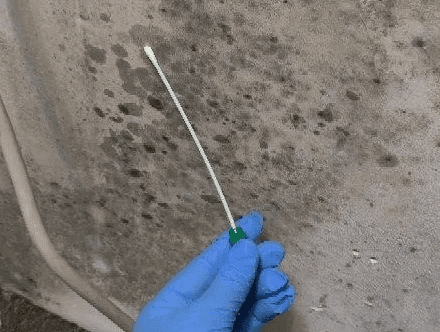
Sample collection. Mycotoxins bind to dust particles and settle onto surfaces over time. Samples are collected from settled dust or targeted locations most likely to reflect accumulated toxin exposure — typically areas with historical moisture concerns or high occupancy.
Laboratory analysis. Samples are processed through a specialized laboratory panel that identifies specific mycotoxin markers — including aflatoxins, ochratoxin A, trichothecenes, zearalenone, and others depending on the panel selected. Not every panel tests for every toxin; the panel is selected based on the clinical context and suspected mold types.
Results and interpretation. Results are returned from the lab and walked through directly — what the findings indicate, what they don't indicate, and how they fit into the broader environmental and clinical picture. This isn't a data dump. It's a consultation with someone who understands both the environmental science and the health context.
What Mycotoxin Testing Doesn't Replace
This is worth being direct about.
Mycotoxin testing is a specialized tool for specific situations. It is not a screening test for every home with mold concerns. It doesn't identify mold species, spore levels, or active growth sources. It doesn't replace a physical inspection of the building.
If you're in the early stages of investigating a mold concern — unusual odors, visible growth, history of water damage, or general indoor air quality questions — the right starting point is a mold inspection and standard mold testing. Mycotoxin testing becomes relevant when those findings don't fully explain what occupants are experiencing, or when the clinical picture specifically calls for toxin documentation.
If you're unsure which service applies to your situation, a free consultation will help clarify that before any testing is ordered.
Why Independence Matters in Mycotoxin Testing
Mycotoxin results — particularly positive findings — can create significant anxiety and pressure to take immediate, expensive action.
That pressure is easier to manage when the person interpreting your results has no financial interest in what comes next.
Utah Mold Pros does not remediate. We don't sell air purifiers, filtration systems, or treatment protocols. We have no referral relationships with companies that profit from our findings.
Our role is to provide accurate environmental data and honest interpretation. What you do with that information — and who helps you act on it — is your decision.
About Utah Mold Pros
Utah Mold Pros provides independent, certified mycotoxin testing and environmental mold assessments throughout Salt Lake County and Northern Utah. Every assessment is performed by Devon Kennedy, a Certified Indoor Environmentalist through the American Council for Accredited Certification (ACAC).
Devon holds a BSc in Microbiology and an MBA, and works directly with homeowners, physicians, and families navigating complex indoor environmental cases — including CIRS, PANS, and PANDAS. His approach combines scientific rigor with the clinical literacy needed to make environmental findings useful in a medical context.
We do not perform remediation, ensuring that every finding is unbiased and every recommendation is based solely on what the environment contains.
Mycotoxin Testing Service Areas in Salt Lake County
We serve homeowners, renters, and families working with healthcare providers throughout Salt Lake County — including Salt Lake City, South Salt Lake, Millcreek, Holladay, Murray, Midvale, Sandy, Draper, Cottonwood Heights, West Valley City, West Jordan, South Jordan, Riverton, Herriman, Taylorsville, Kearns, and Magna.
Local. Independent. We come to you.
Schedule Mycotoxin Testing in Utah
If you're working with a healthcare provider on a biotoxin-related case, or if standard mold testing hasn't explained ongoing symptoms, the next step is a conversation.
Call or text (385) 775-2219 to discuss your situation. Free consultations available.
ACAC Certified. Independent. No remediation. No conflicts. Just answers.