
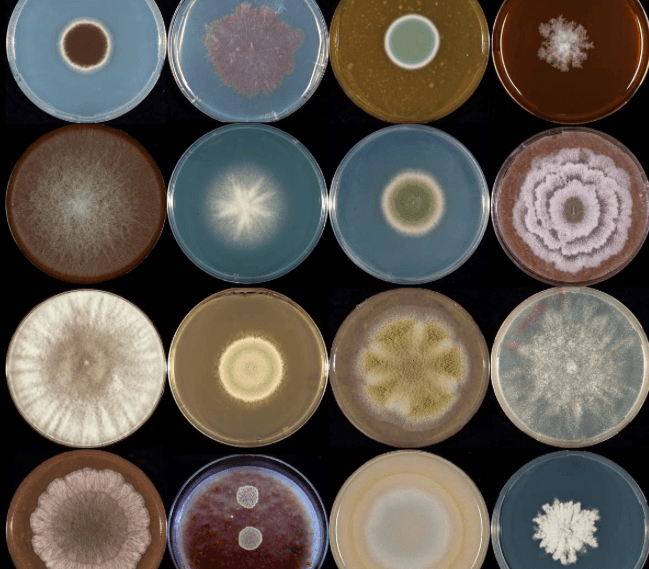
Fungal Glossary
A guide to common indoor fungi and how they can impact your home, air quality, and health.
Mold & Fungal Glossary | Indoor Environmental Reference Guide
This glossary serves as a reference guide for understanding fungi and particles commonly detected during mold and IAQ assessments. It is organized into four categories — Indoor Water-Related, Indoor/Outdoor, Predominantly Outdoor, and Particulates — to help clarify where each is typically found and what detection may indicate.
This guide provides educational context only. It is not a diagnostic tool and is not a substitute for professional inspection or laboratory testing. Lab results should always be interpreted in the context of the building, the outdoor baseline, and the occupant situation — not in isolation.
How to Use This Glossary
Each category carries a different default interpretation:
Predominantly Indoor Water-Related — Finding these indoors is always significant. These species are not abundant outdoors. Their presence indoors indicates moisture damage, often chronic.
Indoor/Outdoor — Context and quantity determine whether this is a concern. Compare indoor levels to the outdoor control sample before drawing conclusions.
Predominantly Outdoor — Usually not a concern unless significantly elevated compared to the outdoor baseline. Presence alone is not diagnostic.
Background Particulates — Non-fungal particles that appear in air and dust samples. Evaluated alongside spore data to provide a complete picture of indoor air quality.
Category 1: Predominantly Indoor Water-Related Fungi
These fungi are NOT typically abundant in outdoor air. Their detection indoors — even at low levels — often indicates water damage or chronic moisture. Quantity matters less than presence. A single colony-forming unit of Stachybotrys carries more interpretive weight than hundreds of outdoor-infiltrating Cladosporium spores.
Aspergillus / Penicillium Chains
Common Name: A/P Chains Scientific: Aspergillus spp. / Penicillium spp. Natural Habitat: Soil, decaying vegetation, stored foods Indoor Substrates: Wet drywall, insulation, dust, wood, food sources Water Activity:Moderate–high moisture Spread: Airborne conidia; easily aerosolized Allergen Potential: High — documented respiratory sensitizer Toxins: Some species produce mycotoxins and VOCs
Notes: The chain formation is the key interpretive detail. Outdoor Aspergillus/Penicillium spores typically appear singly. Chains indicate the spores were released from active indoor growth nearby — the colony is close. Elevated A/P chains on a lab report is one of the clearer indicators of an active indoor source.
Chaetomium
Common Name: Chaetomium Scientific: Chaetomium globosum (most common species) Natural Habitat: Cellulose-rich, chronically damp environments Indoor Substrates: Wet drywall, paper, wallpaper backing, wood framing Water Activity: Requires very wet conditions — chronic saturation Spread: Ascospores released via water disturbance or structural damage Allergen Potential: Moderate — associated with respiratory irritation Toxins: Some species produce chaetoglobosins, a class of mycotoxins
Notes: A strong and reliable indicator of long-term water intrusion. Chaetomium doesn't establish from brief or incidental moisture — finding it indoors implies a sustained water source. It is one of the five species evaluated in the HERTSMI-2 panel and is specifically relevant in CIRS clinical evaluation.
Cladosporium sphaerospermum
Common Name: Clado-Sphaero Scientific: Cladosporium sphaerospermum Natural Habitat: Vegetation, humid indoor surfaces Indoor Substrates: Window sills, HVAC systems, wet drywall, wood Water Activity: Requires more moisture than typical Cladosporium species Spread: Air currents; surface sporulation Allergen Risk: Moderate–highToxins: Rare — low known toxicity
Notes: Distinguished from the more common outdoor Cladosporium species by its higher moisture requirement. A reliable indicator of sustained indoor moisture. Often visually identifiable on surfaces. Its presence helps differentiate outdoor infiltration from active indoor growth when Cladosporium is found in elevated quantities.
Fusarium
Common Name: Fusarium Scientific: Fusarium spp. Natural Habitat: Plants, soil, agricultural settings Indoor Substrates: Very wet drywall, humidifiers, potted plants, produce Water Activity: Very high — thrives in saturated or near-saturated conditions Spread: Airborne spores, water splash, contaminated produce Allergen Risk: Potential respiratory irritant Toxins: May produce trichothecenes, fumonisins, and zearalenone
Notes: More common outdoors, but indoor presence implies persistent and significant wetness. Notably, Fusarium is one of the few mold genera capable of causing invasive infection in immunocompromised individuals — relevant context for physicians treating patients with immune dysfunction, CIRS, or those on immunosuppressive therapy. Indoor detection warrants both environmental and clinical attention in those populations.
Gliomastix
Common Name: Gliomastix Scientific: Gliomastix spp. Natural Habitat: Soil, decaying vegetation Indoor Substrates: Water-damaged building materials Water Activity: High moisture requirement Spread: Fragmentation and conidia release Allergen Risk: Not well established Toxins: Unknown
Notes: Uncommon in routine lab reports. When found indoors, it carries significance disproportionate to its frequency — its moisture requirements mean its presence is not incidental.
Scopulariopsis
Common Name: Scopulariopsis Scientific: Scopulariopsis brevicaulis (most frequent species) Natural Habitat: Soil, decaying organic matter Indoor Substrates: Damp wood, drywall, subflooring Water Activity: High — comparable to Stachybotrys Spread: Spores released upon drying or physical disruption Allergen Risk: Respiratory and allergic concern Toxins: Potential metabolites — less documented than other genera
Notes: Presence indicates severe and sustained moisture. Frequently co-occurs with Stachybotrys in chronically wet building assemblies. When both are found together, it reinforces the interpretation of long-term water damage rather than an acute event.
Stachybotrys
Common Name: Stachy / "Toxic Black Mold" (informal, imprecise) Scientific: Stachybotrys chartarum Natural Habitat: Cellulose materials with chronic saturation Indoor Substrates: Wet drywall, OSB, insulation, paper-faced materials Water Activity: >0.95 aw — requires a continuous and sustained water source Spread: Heavy, sticky spores — not easily airborne unless physically disturbed Allergen Risk: Sensitizer — associated with inflammatory responsesToxins: Trichothecene mycotoxins possible in certain strains, not universally
Notes: Detection indoors strongly signals long-term water damage — Stachybotrys does not establish from brief moisture events. Its spore characteristics create a critical interpretive challenge: because spores are heavy and don't aerosolize easily, air sampling frequently underrepresents or misses active Stachybotrys growth entirely. A low or absent air count does not rule out the presence of this mold. Physical inspection of building materials is essential when Stachybotrys is clinically suspected. It is one of the five HERTSMI-2 species and a primary target in CIRS environmental evaluation.
Trichoderma
Common Name: Trichoderma Scientific: Trichoderma spp. Natural Habitat: Soil, compost, decaying wood Indoor Substrates: Wet wood framing, OSB, drywall paper, water-damaged cellulose Water Activity: Moderate–high moisture Spread: Airborne conidia; rapid colonizer Allergen Risk: Moderate — documented as a respiratory sensitizer in some populations Toxins: Some species produce trichothecene-related compounds and volatile metabolites
Notes: An increasingly recognized water-damage indicator that appears on lab reports more frequently than it's discussed. Trichoderma is an aggressive colonizer of wet wood and is often found alongside Stachybotrys and Chaetomium in chronically damaged building assemblies. Its presence indoors without a corresponding outdoor source warrants investigation of building materials. Growing recognition in the CIRS literature as a species of clinical relevance in biotoxin illness cases.
Ulocladium
Scientific: Ulocladium spp. Natural Habitat: Outdoor vegetation, soil Indoor Substrates: Wet gypsum board, carpets, wallpaper Water Activity: High moisture requirement Spread: Airborne spores when dried Allergen Risk:Major allergen — well documented Toxins: None strongly documented
Notes: Can resemble Alternaria microscopically and may require expert identification to differentiate. Its high moisture requirement means indoor detection points toward active moisture rather than outdoor infiltration.
Wallemia
Scientific: Wallemia sebi (most common species) Natural Habitat: Dry food products, house dust, low-moisture environments Indoor Substrates: House dust, wooden surfaces, insulation Water Activity: Extremely low — xerophilic, grows at water activity levels that inhibit most other molds Spread: Small spores; easily aerosolizedAllergen Risk: Sensitizer for some individuals, particularly those with mold-related illness Toxins: May produce walleminol and wallimidione
Notes: Wallemia has the opposite environmental profile of Stachybotrys — it thrives in dry conditions and does not require active moisture to persist. This has a specific and underappreciated clinical implication: Wallemia can remain present in dust and building materials long after a moisture problem has been addressed and the building has dried out. For CIRS patients who have completed remediation, Wallemia detected in dust sampling may represent residual exposure even when current moisture conditions appear normal. It is one of the five HERTSMI-2 species precisely because of its persistence in post-remediation environments.
Category 2: Indoor/Outdoor Fungi
These fungi are common outdoors and may appear indoors through normal air exchange or as settled dust. Indoor presence does not automatically indicate mold growth or water damage. Interpretation depends on quantity, comparison to the outdoor control sample, and overall building conditions. Elevated indoor levels relative to outdoor baseline is the key interpretive threshold.
Alternaria
Common Name: Alternaria Scientific: Alternaria spp. Natural Habitat: Decaying vegetation, soil, plant surfacesIndoor Substrates: Damp drywall, carpeting, window sills Water Activity: Moderate–high moisture for indoor growth Spread: Airborne spores; large multicelled conidia spread easily outdoors Allergen Potential: High — one of the most documented asthma triggers and exacerbators Toxins: Some species produce alternariol and tenuazonic acid
Notes: Primarily outdoor in origin. Elevated indoor levels relative to the outdoor control suggest an active indoor moisture source. Can be visually similar to Ulocladium and Stemphylium — species identification may require expert review.
Aspergillus / Penicillium (General Group)
Scientific: Aspergillus spp. / Penicillium spp. Natural Habitat: Soil, vegetation, stored foods — globally ubiquitousIndoor Substrates: Dust, drywall, insulation, carpeting, food storage Water Activity: Can grow even at lower humidity; colonizes faster with more moisture Spread: Highly airborne conidia — rapid and efficient colonizersAllergen Potential: High — well-documented sensitizers Toxins: Some species produce mycotoxins and VOCs
Notes: Common background presence in most homes. Elevated indoor levels compared to outdoor baseline suggest a possible indoor growth source. The critical interpretive distinction from the Indoor Water-Related category: single spores are normal background; chains (see A/P Chains above) indicate active nearby growth. When spore counts are high but no chains are present, outdoor infiltration is the more likely explanation.
Cladosporium
Scientific: Cladosporium spp. Natural Habitat: Plants, wood, soil — extremely abundant outdoors Indoor Substrates: Window frames, HVAC systems, cold surfaces, wood trim, dust Water Activity: Moderate moisture for indoor growth Spread: Airborne dry spores; extremely abundant seasonally Allergen Potential: Very high — one of the most common outdoor allergen triggers Toxins: Rare — low toxicological concern
Notes: Often the most abundant spore type in both indoor and outdoor air samples. Presence alone is not significant. The interpretive question is always relative: are indoor levels substantially higher than outdoors? If yes, and particularly if Cladosporium sphaerospermum (see Indoor Water-Related category) is identified specifically, an indoor growth source should be investigated.
Category 3: Predominantly Outdoor Fungi
These species are primarily outdoor molds. Their spores routinely enter homes through ventilation, open windows, doors, clothing, and pets. Indoor detection is not normally a concern unless levels are significantly higher indoors than outdoors, which may indicate unusual infiltration, nearby vegetation or soil disturbance, or in rare cases an indoor moisture source.
Arthrinium
Scientific: Arthrinium spp. | Habitat: Wood, grasses, plant debris | Allergen Risk: Moderate | Notes: Mainly outdoor. Indoor presence linked to plant soil or water-damaged wood. Some species associated with mycotoxin production.
Ascospores (Group)
Scientific: Ascomycota spore group | Habitat: Fungi on plants, soil, decaying matter | Allergen Risk: Low–moderate | Notes: Common and abundant outdoors, especially after rain. Indoor presence typically reflects normal air exchange, not active growth.
Basidiospores
Scientific: Basidiomycota spore group | Habitat: Mushrooms, bracket fungi, yard mulch | Allergen Risk: High potential | Notes: Almost never grows actively indoors. High indoor counts suggest poor filtration or ventilation rather than a mold infestation. Not a toxin concern in typical IAQ contexts.
Bipolaris
Scientific: Bipolaris spp. | Habitat: Soil, grasses, crops | Allergen Risk: Known asthma trigger | Notes: High indoor counts indicate outdoor penetration or nearby plant contamination. Some strains produce mycotoxins.
Bispora
Scientific: Bispora spp. | Habitat: Soil, wood | Notes: Rare indoor finding. When present, more likely an indicator of wood moisture than a meaningful infestation.
Botrytis
Scientific: Botrytis cinerea | Common Name: Gray Mold | Habitat: Fruits, vegetables, flowers | Notes: Indoor presence indicates spoiled produce or decaying fresh-cut flowers — not a building material concern.
Brachysporium
Scientific: Brachysporium spp. | Habitat: Soil, rotting wood | Notes: Very rare indoor finding. No significant IAQ relevance in typical residential assessments.
Cercospora
Scientific: Cercospora spp. | Habitat: Agricultural fields, crops | Notes: Often spikes seasonally during harvest. Rarely an indoor problem.
Coelomycetes (Group)
Scientific: Coelomycetes (asexual fruiting-body fungi) | Habitat: Leaves, stems, plant debris | Notes: Not efficiently airborne indoors. Not IAQ-significant unless found in extreme quantities.
Curvularia
Scientific: Curvularia spp. | Habitat: Tropical and subtropical foliage | Allergen Risk: Moderate–high | Notes: Indoor detection usually represents tracking from outside. Not a building material colonizer under typical conditions.
Epicoccum
Scientific: Epicoccum nigrum | Habitat: Decaying vegetation, soil | Allergen Risk: High — documented respiratory sensitivity | Notes: Easily airborne outdoors. Indoor presence is generally normal infiltration unless counts are heavily elevated vs. outdoor baseline.
Exosporium
Scientific: Exosporium spp. | Habitat: Plant-associated | Notes: Extremely rare indoors. Not considered a building mold.
Fusicladium
Habitat: Leaves, crop plants | Notes: Common in agricultural outdoor air. Very low indoor IAQ relevance.
Lasiosphaeria
Scientific: Lasiosphaeria spp. | Habitat: Decaying wood, soil | Notes: Minimal concern for indoor air assessments in most residential contexts.
Mitospores (Group)
Scientific: Asexual spore category (non-identifiable to genus without visible structures) | Notes: Appear commonly in lab reports as unidentified asexual spores. Not diagnostic on their own — evaluated in context of the full sample profile.
Myrothecium
Scientific: Myrothecium spp. | Habitat: Soil, plant surfaces, crop residue | Allergen Risk: Low–moderate | Toxins:Some species produce trichothecene toxins | Notes: More relevant agriculturally. Can occasionally colonize damp textiles or wood indoors. Toxin potential warrants note when found at elevated indoor levels.
Nigrospora
Scientific: Nigrospora spp. | Habitat: Tropical and warm climates, soil | Allergen Risk: Moderate | Notes: Indoor presence typically reflects open windows or outdoor airflow. Minimal building colonization potential.
Oidium / Powdery Mildew
Scientific: Oidium spp. | Common Name: Powdery Mildew | Habitat: Plant pathogen on foliage | Notes: Does not colonize building materials. Indoor detection indicates affected houseplants or nearby outdoor vegetation.
Paecilomyces
Scientific: Paecilomyces spp. | Habitat: Soil, foods, decaying plants | Allergen Risk: Moderate — opportunistic infection risk in immunocompromised individuals | Notes: Spores resemble Aspergillus/Penicillium and may require expert identification. Elevated counts in immunocompromised occupants warrant clinical attention.
Peronospora / Downy Mildew
Scientific: Peronospora spp. | Habitat: Foliar plant pathogen | Notes: No growth on building materials. Appears when garden vegetation is in close proximity to air intakes or open windows.
Pestalotiopsis
Scientific: Pestalotiopsis spp. | Habitat: Plants, decaying leaves | Notes: Very low indoor relevance. Notable for one unusual property: certain strains are capable of degrading synthetic polyurethane — an interesting environmental footnote with no current practical IAQ implication.
Pithomyces
Scientific: Pithomyces spp. | Habitat: Grass, plant litter, soil | Allergen Risk: Mild | Notes: Indoor presence is usually normal outdoor infiltration. Occasional indoor growth on damp paper.
Smut / Periconia / Myxomycete-like
Group: Plant parasites and pathogens with similar round brown morphology | Habitat: Fields, grasses, forest floors | Notes: Low indoor concern. High counts indoors may indicate significant air infiltration from adjacent exterior vegetation.
Stemphylium
Scientific: Stemphylium spp. | Habitat: Plant material | Notes: Occasional growth on wet textiles indoors. Visually similar to Alternaria and Ulocladium — may require expert differentiation in ambiguous cases.
Torula
Scientific: Torula spp. | Habitat: Plants, decaying foliage | Allergen Risk: Moderate | Notes: More common near agricultural zones. Minimal indoor IAQ significance unless markedly elevated relative to outdoor baseline.
Urediniospores (Rust Spores)
Scientific: Rust fungi spore stage | Habitat: Crops, grasses | Notes: Often elevated after windstorms or rain events. Harmless indoors in typical quantities.
Zygomycetes Group
Included Genera: Mucor, Rhizopus, and related genera | Habitat: Soil, compost, manure | Notes: Indoor presence typically indicates spoiled food or very high indoor humidity — not wall or structural colonization under normal conditions. Rapid sporulators when conditions allow.
Zygophiala
Scientific: Zygophiala jamaicensis | Habitat: Plant leaves | Notes: Known for sooty blotch on fruit surfaces. Minimal indoor IAQ relevance.
Category 4: Background Particulates
Non-fungal particles that appear in air and dust samples. Evaluated alongside spore data to provide a complete picture of indoor air quality. Not diagnostic on their own, but useful for understanding occupancy patterns, ventilation quality, and indoor environment conditions.
Particulate | Primary Source | Interpretation | Clinical Notes |
|---|---|---|---|
Hyphal Fragments | Indoor mold growth | Elevated counts are a meaningful growth indicator — often more impactful than spores due to smaller size and deeper respiratory penetration | Fragments from disrupted mold colonies can trigger inflammatory responses even when spore counts appear low |
Pollen | Outdoor vegetation | Expected seasonally; high indoor counts indicate open windows, poor filtration, or nearby vegetation | Relevant for allergy sufferers; not a mold indicator |
Skin Cells (Human/Animal) | Occupancy and pets | Reflects traffic patterns and hygiene conditions | Contributes to dust mite populations; relevant in allergy and IAQ contexts |
Carbon Particles | Combustion sources | Elevated near candles, gas stoves, fireplaces, or high-traffic outdoor air | Respiratory irritant at sustained elevated levels; relevant in IAQ complaints |
Soil Particles | Tracked indoors | Common in basements, entryways, and crawlspace-adjacent areas | Seasonal variation expected |
PM2.5 | Mixed combustion, dust, biological | The most clinically significant particle size fraction — fine enough to penetrate deep into the lower respiratory tract | Elevated PM2.5 is associated with respiratory and inflammatory health effects; a key metric in medically-driven IAQ assessments |
PM1–PM10 (Broader Range) | Dust, biological particles, combustion | Overall IAQ load indicator | Useful for evaluating post-remediation air quality and ventilation effectiveness |
Utah Mold Pros provides independent mold inspection and indoor air quality assessments across Northern Utah. This glossary is maintained for educational purposes and updated as the indoor environmental science evolves. For questions about a specific lab result or environmental assessment, contact Devon Kennedy, CIE — (385) 775-2219.