
DIY Mold Test Kits vs. Professional Mold Inspection: What Homeowners in Utah Should Know
DIY Mold Test Kits vs. Professional Mold Inspection: What Homeowners in Utah Should Know
If you’ve looked into mold testing, you’ve likely come across DIY mold test kits.
They’re widely available, relatively inexpensive, and marketed as a simple way to evaluate your home. For many homeowners, they feel like a reasonable starting point.
But there’s a problem.
Most DIY mold test kits do not answer the question homeowners are actually trying to solve. Instead, they often introduce confusion, misinterpretation, and in some cases, poor decision-making.
Understanding what these kits measure—and what they miss—is key to making informed decisions about your home.
These Tests Detect Mold Presence — Not Mold Problems
Most DIY mold kits rely on settle plates or basic air collection methods. These approaches are designed to capture airborne particles and identify whether mold spores are present.
The limitation is straightforward.
Mold spores are present in virtually all indoor environments. A result showing “mold detected” is expected and, on its own, does not indicate a problem.
The real question is not whether mold exists, but whether there is active growth driven by moisture conditions within the home.
DIY kits are not designed to make that distinction.
Why DIY Mold Test Kit Results Are Often Misleading
Lack of Environmental Context
A test result without context has limited value. DIY kits do not account for building conditions, moisture history, or ventilation patterns.
Without that information, it is not possible to determine whether results reflect normal background levels or something more significant.
No Moisture Assessment
Mold growth is a function of moisture.
Leaks, condensation, elevated humidity, and wet building materials are the underlying drivers of amplification. DIY kits do not evaluate any of these conditions.
As a result, they do not identify the cause of a mold issue—only the presence of spores, which are already expected.
No Insight Into Source or Location
Even when elevated mold levels are present, DIY kits provide no information about where the issue originates.
Potential sources may include:
Wall or ceiling cavities
Attic spaces
HVAC systems
Subfloor or basement environments
Without identifying the source, there is no clear path to resolution.
Inconsistent Sampling Methods
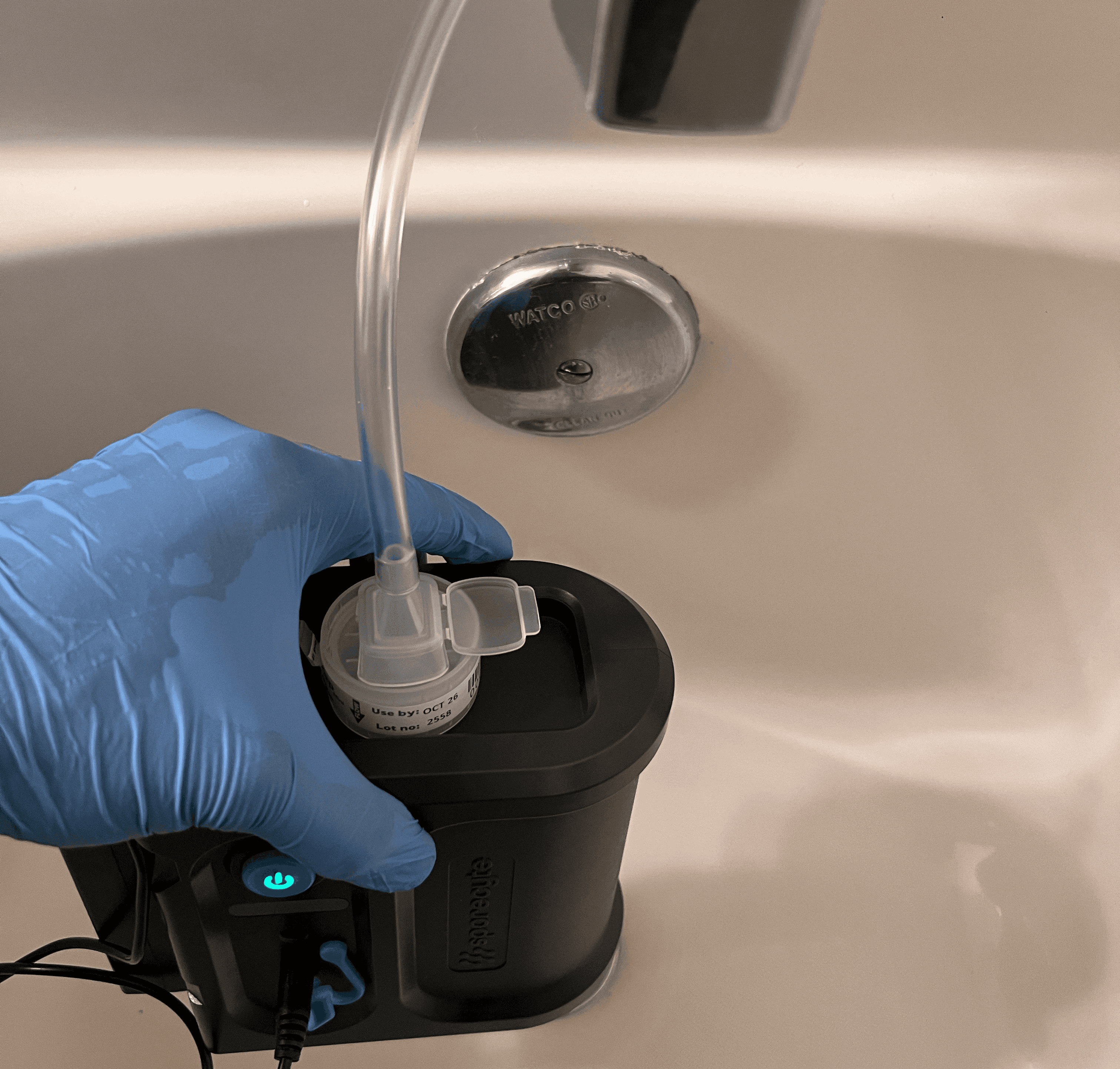
Professional air sampling follows standardized protocols, including calibrated pumps, controlled flow rates, and comparison against outdoor conditions.
DIY kits do not follow these standards.
Results can vary based on placement, timing, air movement, and duration of exposure. This variability reduces reliability and makes meaningful interpretation difficult.
Culture-Based Testing Bias
Many DIY kits rely on mold growth in a petri dish over time.
This method introduces bias. Fast-growing molds can dominate the sample, while slower-growing species may be underrepresented or missed entirely.
The result is not a true representation of the indoor environment.
What a Professional Mold Inspection in Utah Evaluates
A professional mold inspection is not centered on testing alone. It is a structured evaluation of the home as a system, with a focus on identifying conditions that support microbial growth.
Testing, when used, is a supporting tool—not the starting point.
A comprehensive assessment typically includes:
Moisture mapping using moisture meters and humidity measurements
Thermal imaging to identify hidden moisture anomalies
Targeted cavity inspections using tools such as borescopes
HVAC system evaluation, including evaporator coils, drain lines, and filtration
Strategic air or surface sampling when conditions warrant further confirmation
This approach ensures that findings are tied to building conditions and can be acted upon.
The Risk of Relying on DIY Mold Test Kits
The primary concern with DIY testing is not just accuracy—it is the interpretation.
A positive result may lead to unnecessary concern or remediation efforts that are not justified. A negative result may provide false reassurance while underlying issues remain unaddressed.
In both cases, the homeowner is left without a clear understanding of the situation.
When Mold Testing Is Actually Useful
Mold testing can provide value when it is used within the context of a broader investigation.
Proper testing is:
Based on observed conditions
Conducted using calibrated equipment
Interpreted alongside moisture data and building history
Without these elements, test results lack practical meaning.
Conclusion
DIY mold test kits offer a simple answer to a complex problem.
They confirm that mold spores are present—but they do not determine whether there is a mold issue, where it is located, or what is causing it.
For homeowners in Utah, the focus should not be on detecting mold alone. It should be on understanding the conditions that allow it to grow and how those conditions can be corrected.
Mold is not just an air quality issue. It is a moisture and building science issue.
Testing can support that understanding, but it cannot replace it.
About the Author
Devon Kennedy is a Council-certified Indoor Environmentalist (CIE) and founder of Utah Mold Pros. He specializes in moisture-driven mold investigations and indoor environmental assessments across Utah, with a focus on identifying root causes rather than relying on surface-level testing.
Utah Mold Pros operates independently and does not perform remediation, ensuring that every assessment remains unbiased and centered on accurate diagnosis.


