
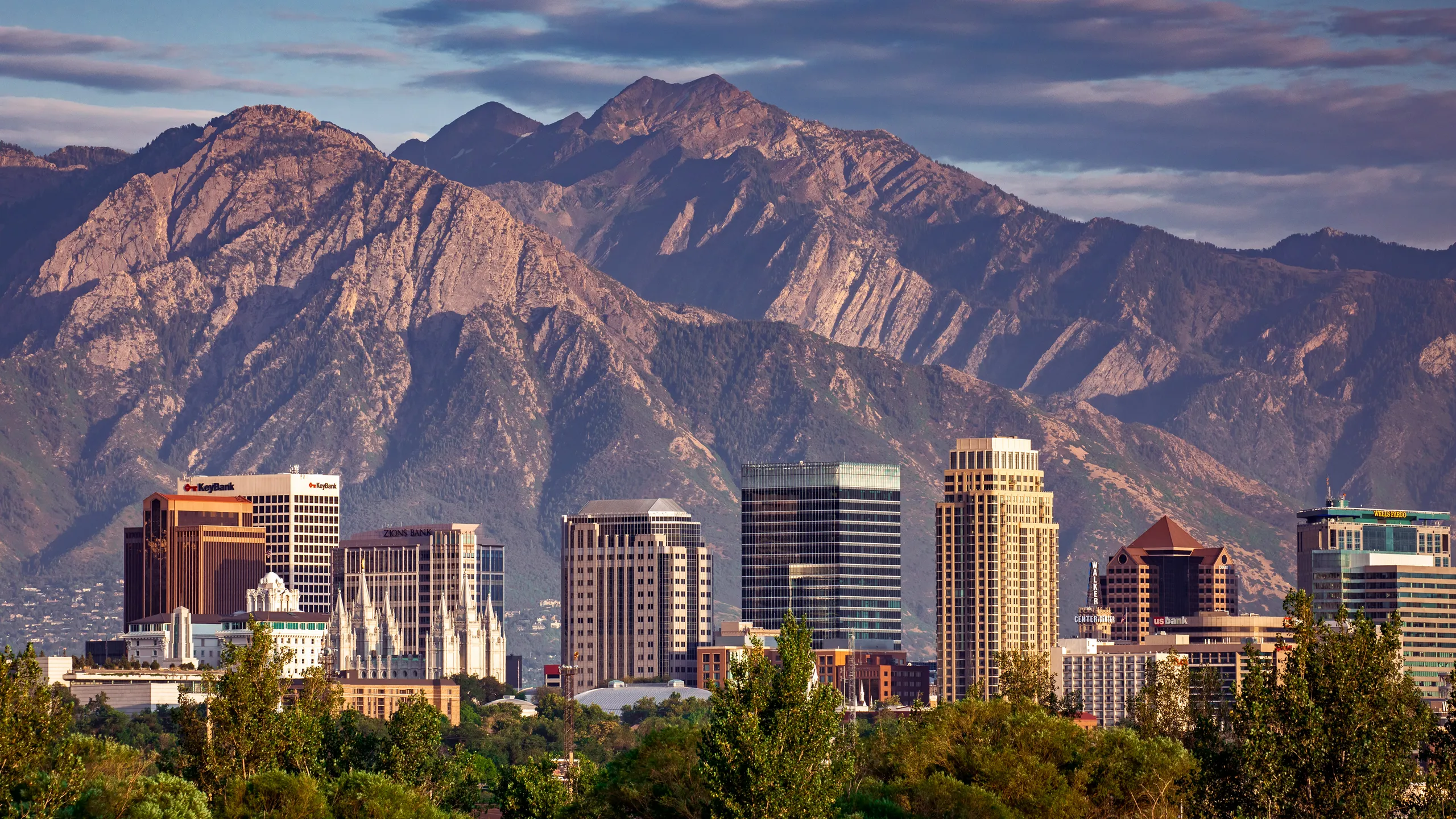
Mold Inspection in Salt Lake City: What to Expect and Who to Call
Mold Inspection in Salt Lake City: What to Expect and Who to Call
Salt Lake City has a mold problem that most people don't expect.
The assumption is that Utah's dry climate keeps mold at bay. And for parts of the state, that's partially true. But Salt Lake City sits in a valley. It collects inversion air, it has aging housing stock, and it has basements — a lot of them — that weren't built with modern moisture management in mind.
Add in the canyon runoff, the irrigation-heavy summers, and the aging infrastructure in neighborhoods like Sugar House, Millcreek, and Rose Park, and you have conditions that produce mold more reliably than most homeowners expect.
If you're searching for a mold inspection in Salt Lake City, here's what you should know before you make a call.
What a Mold Inspection in Salt Lake City Actually Involves
A mold inspection is not a mold test. Those two terms get used interchangeably, and they shouldn't be.
A mold test — usually an air sample or a surface swab — tells you whether mold spores are present. It doesn't tell you where they're coming from, what's driving the growth, or what it means for your home.
A mold inspection is a physical evaluation of the building. It involves looking at the structure — the crawlspace, the basement, the attic, the HVAC, the areas behind and beneath finished surfaces — with an understanding of building science and moisture dynamics.
In Salt Lake City specifically, a thorough inspection should include:
Basement and crawlspace evaluation. Salt Lake has a high concentration of older homes with unfinished or partially finished basements. Moisture intrusion through foundation walls and floor slabs is common, especially in neighborhoods close to the Jordan River or in areas with high water tables.
HVAC and ductwork assessment. Condensation inside duct systems is a frequently overlooked mold source. In homes that have had the furnace or air handler replaced without addressing underlying moisture issues, the ducts themselves can become a distribution point for mold spores.
Roof and attic inspection. Improper attic ventilation is one of the most common mold sources in Utah homes. When warm, humid air from the living space migrates into an underventilated attic, condensation accumulates on the sheathing. It doesn't take long before that becomes an active mold colony.
Moisture mapping. Thermal imaging and moisture meters identify areas of elevated moisture that aren't yet visibly damaged. Finding moisture before it becomes mold is the point.
Sampling — air or surface — is used to confirm findings and document conditions. It's a tool, not the inspection itself.
Who Should You Call for a Mold Inspection in Salt Lake City
Not every mold inspector in Salt Lake City is operating under the same standards. The industry is loosely regulated, which means the barrier to calling yourself a mold inspector is lower than most homeowners assume.
Two questions to ask before you hire anyone.
Do you also offer remediation?
If the answer is yes, proceed carefully. A company that inspects and remediates under the same roof has a financial incentive that isn't aligned with yours. They get paid twice when they find something significant. That doesn't mean every combined company is dishonest — but the structure creates conditions where over-reporting is financially rewarding and hard to detect.
An independent inspector — one who only inspects and never remediates — has one product: an accurate assessment. Their business depends on getting it right, not on generating downstream remediation work.
What certification does your inspector hold?
The most credible certifications for mold inspectors come from the American Council for Accredited Certification (ACAC). Look for a CIE (Certified Indoor Environmentalist), CMC (Certified Mold Consultant), or CIEC designation. These require verified field experience and a demonstrated standard of knowledge that goes well beyond a weekend course or an online certificate.
When to Get a Mold Inspection in Salt Lake City
Some situations are obvious. You see visible growth. You smell something musty that doesn't go away. You've had a water loss — a pipe leak, a flooded basement, a roof leak — that wasn't dried out quickly.
Others are less obvious but equally important.
Before buying a home. A standard home inspection is not a mold inspection. Home inspectors are generalists. They're not trained in building science or moisture diagnostics, and they're not sampling the air or the surfaces. If the home you're buying has a basement, a crawlspace, or any history of moisture issues, an independent mold inspection before closing is worth the investment.
After remediation. If mold work has already been done on the home, a clearance inspection by an independent party confirms whether the work was completed correctly. You shouldn't use the same company that performed the remediation to verify their own work.
When symptoms persist. Unexplained congestion, fatigue, brain fog, or headaches that improve when you leave the home and return when you come back are worth taking seriously. Indoor air quality assessments can identify whether the home environment is a contributing factor.
The Bottom Line on Mold Inspections in Salt Lake City
Salt Lake City's housing market moves fast. Homes get bought and sold without adequate environmental due diligence. Mold gets remediated by the same company that found it. Reports get delivered without context or explanation.
You don't have to accept that.
A good mold inspection gives you accurate information. It tells you what's present, what's driving it, how significant it is, and what — if anything — needs to happen next. It doesn't upsell you on remediation. It doesn't generate unnecessary testing. It gives you what you actually need to make an informed decision about your home.
That's the standard. Make sure whoever you hire is meeting it.
Utah Mold Pros provides independent mold inspection and indoor air quality assessments across Salt Lake County and Utah County. ACAC Certified. No remediation. No conflicts. Just answers. Call or text (385) 775-2219.


