
Maybe It’s Not Mold: Understanding CO₂, Formaldehyde, and Indoor Air Quality
Maybe It’s Not Mold: Understanding CO₂, Formaldehyde, and Indoor Air Quality
When people begin experiencing symptoms at home—brain fog, fatigue, headaches, or respiratory irritation—mold is often the first suspect.
And in some cases, that assumption is correct.
But in many homes, the issue isn’t mold at all. It’s indoor air quality—specifically elevated carbon dioxide (CO₂) and chemical exposures like formaldehyde. These are two of the most overlooked contributors to poor indoor environments, yet they frequently produce symptoms that are nearly indistinguishable from those commonly attributed to mold.
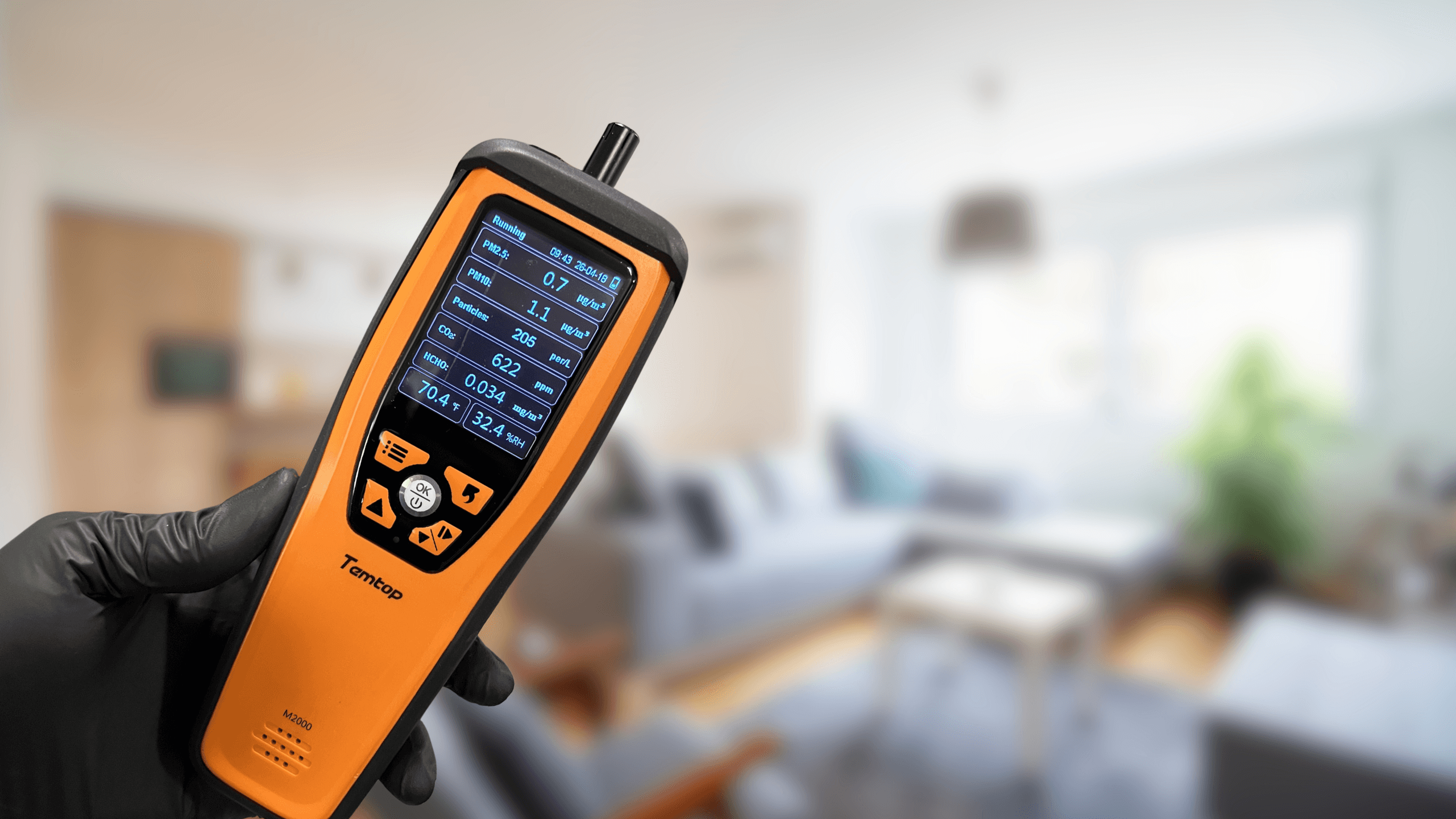
Carbon dioxide is not inherently harmful at the levels typically found in residential environments, but it plays an important role as an indicator of ventilation. Organizations such as ASHRAE recognize that indoor CO₂ levels above roughly 800–1,000 parts per million often reflect inadequate air exchange. When ventilation is limited, indoor air becomes stagnant, allowing not only CO₂—but also other byproducts of occupancy and indoor pollutants—to accumulate.
In these conditions, occupants frequently report feeling tired, mentally foggy, or unfocused. Research has shown that even moderate elevations in CO₂ can impact cognitive performance, particularly in areas like decision-making and concentration. In practice, what’s being felt is not just CO₂ itself, but the broader consequence of a poorly ventilated indoor environment.
At the same time, many homes contain another less visible factor: formaldehyde. This compound is a volatile organic compound (VOC) commonly emitted from pressed wood products, cabinetry, flooring, adhesives, and even some household goods. According to both the United States Environmental Protection Agency and the World Health Organization, concentrations around 0.1 mg/m³ are sufficient to cause irritation in sensitive individuals. At or above this level, people may experience burning in the eyes, throat irritation, headaches, or respiratory discomfort.
Unlike mold, which requires moisture to grow, formaldehyde is often tied to materials within the home itself. Newer builds, recent renovations, or newly installed furnishings can all introduce elevated VOC levels into an otherwise “clean” environment. Without proper ventilation, these compounds can linger and build over time.
The challenge—and where many indoor air investigations fall short—is that the symptoms associated with CO₂, formaldehyde, and mold exposure overlap significantly. Fatigue, headaches, respiratory irritation, and general discomfort are not unique to one cause. They are shared responses to a range of indoor environmental stressors.
This is why assuming mold as the default explanation can lead to incomplete or misleading conclusions.
Organizations such as the American Industrial Hygiene Association and the American Council for Accredited Certification emphasize that indoor environmental assessments must be approached holistically. Mold, when present, is almost always a symptom of a moisture issue. But moisture is only one part of the broader indoor air equation. Ventilation, chemical exposures, HVAC performance, and building dynamics all play a role in shaping the environment people are living in.
In the field, it’s not uncommon to evaluate a home where mold testing comes back normal, yet occupants continue to experience symptoms. When CO₂ levels are elevated or VOCs are present, the source of discomfort often becomes clear. The issue isn’t hidden mold—it’s air quality.
This distinction matters. Because solving the wrong problem doesn’t improve the environment.
The reality is simple: mold is one piece of indoor air quality, not the entire picture. A proper assessment doesn’t isolate one variable—it connects them. Moisture, air exchange, materials, and building performance all need to be evaluated together to arrive at a meaningful conclusion.
So if something feels off in your home, it may be mold. But it may not be.
And the only way to know the difference is through a thorough, science-based assessment of the entire indoor environment.
About the Author
Devon Kennedy, BSc, MBA, CIE (ACAC)
Founder, Utah Mold Pros
Devon is a Certified Indoor Environmentalist through the American Council for Accredited Certification, specializing in moisture-driven mold investigations and comprehensive indoor air quality assessments. With a background in biology, laboratory diagnostics, and environmental analysis, his work is grounded in building science, fungal ecology, and real-world field data.
Utah Mold Pros operates independently—no remediation, no conflicts of interest—delivering objective, science-backed insights into the indoor environment.


